
Feature[特集]
大学院で学んだ、現場で活かせる理論 スティーブ・テラダさん From Graduate School to the Field: Practical Theory in Action – Steve Terada


※ The English version of this article follows the Japanese text.
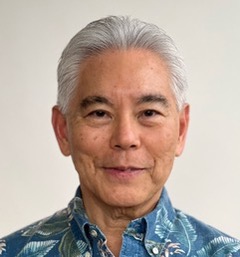
2025年度 長崎大学大学院医歯薬学総合研究科修士課程修了
Mr. Steve Terada
Completed the Master’s Program, Graduate School of Biomedical Sciences, Nagasaki University (FY2025)
縁もゆかりもなかった福島に芽生えた想い
2011年3月、私は米国国防総省(DOD)の上級文官職員として、在日米陸軍司令部がある神奈川県のキャンプ座間を拠点に、日本国内における米陸軍不動産部門の責任者を務めていました。日本で勤務する以前は、ワシントンD.C.の米国務省(DOS)に勤務し、東アフリカや西半球に所在する米国外交不動産を担当するポートフォリオ・マネージャーとして、各国を飛び回る日々を送っていました。こうした仕事を通じて、世界各国の人々が地域社会に根差しながら生計を立て、幸福な生活を営むことに強い関心を抱くようになっていました。この関心が後の私の福島での活動の原点となっているのかもしれません。
2011年3月11日、私は出張先の沖縄で「日本の北部のどこかで大地震が起きた」との知らせを受けました。ただ、私はそれまで福島を訪れた経験がなく、友人や知人もいなかったため、その時は大きな衝撃を受けることはありませんでした。
震災発生から2日後、私は緊急事態発生時の中枢を担う「在日陸軍緊急作戦センター(EOC)」に着任することが決まり、米軍による災害・人道支援活動「トモダチ作戦」に参加しました。米軍は日本国内の放射線レベルを監視・追跡しており、日本側が未入手の情報にもアクセスできていましたが、私自身は放射線に関する知識はなく、大きな不安を感じたことを覚えています。それは一緒に働いている日本人職員や、基地周辺に住んでいる家族も同様でした。
震災発生から3カ月後の6月、福島市にボランティアに行くというハワイの友人に誘われ、休暇を取って同行。しかし、到着した夜、上司から福島から出るように連絡がありました。米政府が原発から80キロ圏内にいる米国人に避難勧告を出していたのです。翌朝、何もできないまま福島を離れることになり、必ず戻って復興を手伝うと福島の友人たちに約束しました。
しかし、再び福島を訪れることができたのは退職後の2018年でした。2週間かけて原発周辺をはじめ県内各地を巡りました。多くの人々と会い福島の現状について学ぶ中で、建物や道路など物理的な復旧はほぼ完了しているのに、県産品の売れ行きは伸び悩み、観光客は減少。“ネガティブな風評”が暗い雲のように漂っている現実に心を痛めました。「福島の風評被害を払拭し、日常生活を取り戻す手助けをしてほしい」。地元の方々の言葉に背中を押された私は、いったん帰国し、1年間のビザを取得し、2019年3月から妻とともに福島市へ移住することを決意したのです。
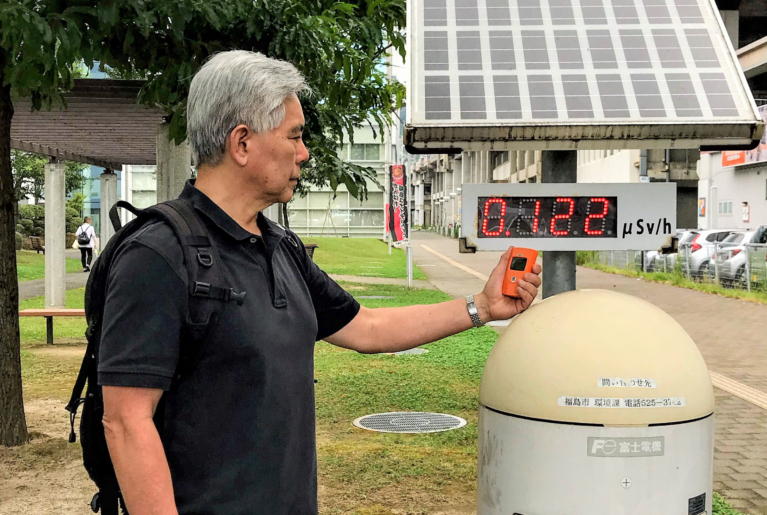
福島に対する風評被害をなくしたい。そう強く感じ、福島市に移住した私は線量計を手に県内各地の環境調査を実施。YouTubeを通じてインタビュー動画の配信や、農作物・海産物の安全性を訴える記事をハワイの地元新聞に寄稿しました。
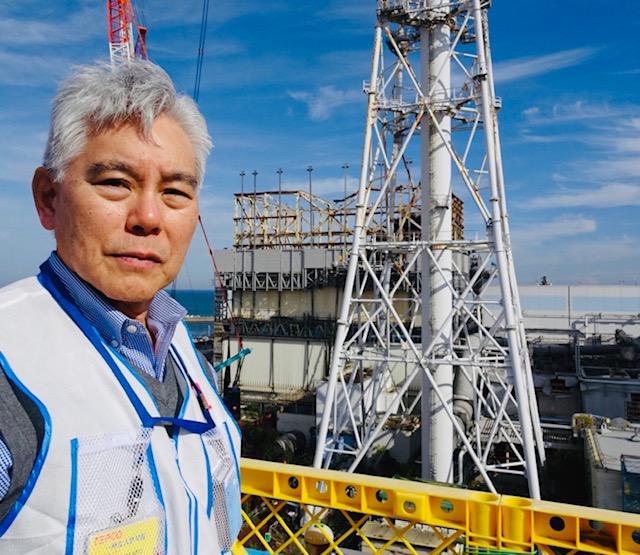
2019年11月、東京電力・福島第一原子力発電所の事故炉を前に撮影。
Mr. Steve Terada conducting environmental studies prior to enrolling in the joint graduate course.
This photo was taken in front of the damaged nuclear reactors at the Daiichi Nuclear Power Plant, Fukushima Prefecture in November 2019.
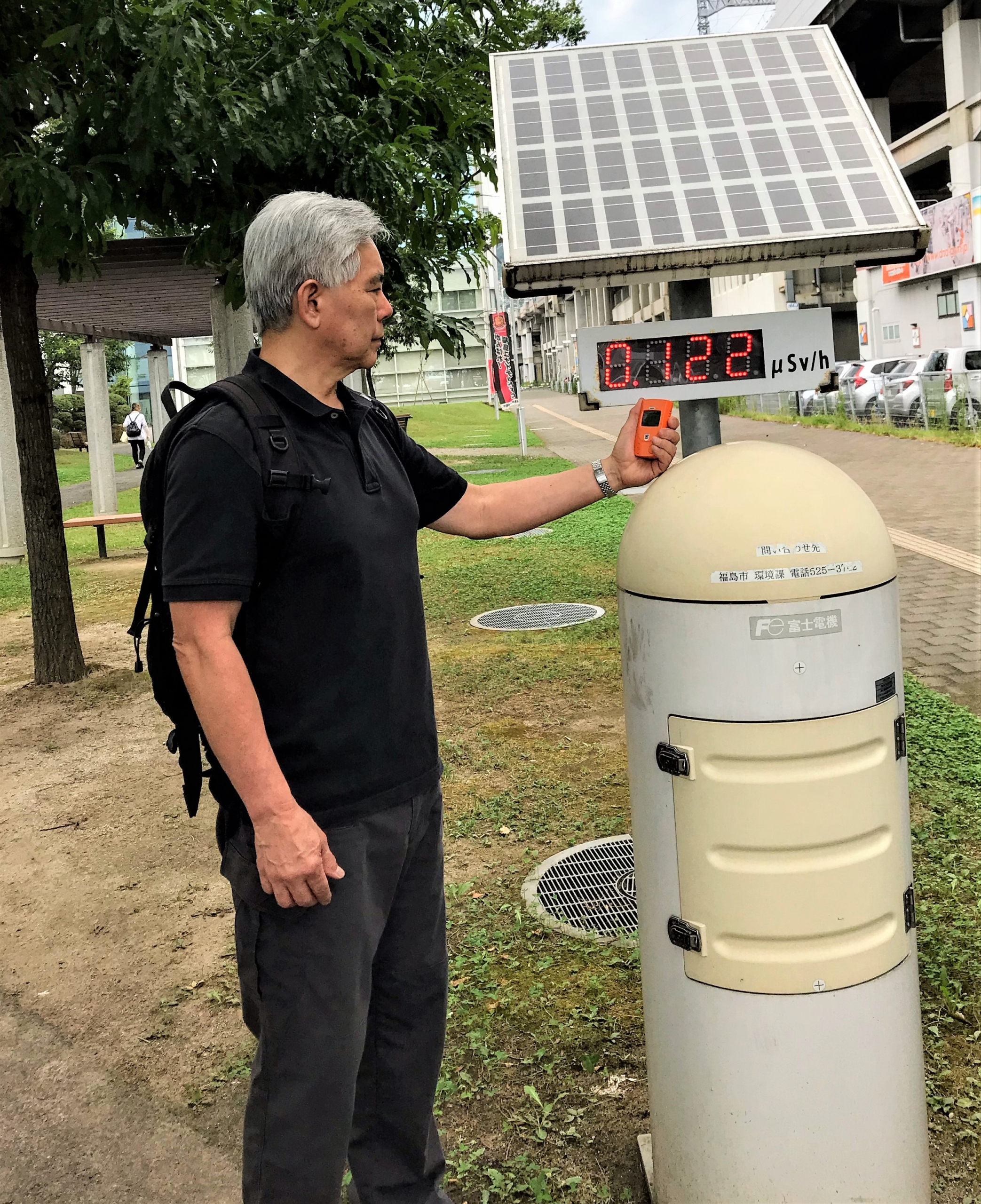
福島市の主要駅に設置された政府の放射線測定器と、自身の個人線量計による数値を比較しています。
Mr. Steve Terada continuing his environmental studies in Fukushima using a personal dosimeter to compare the radiation level from his personal dosimeter with the government’s radiation measuring device located at the Fukushima City main train station (2019).
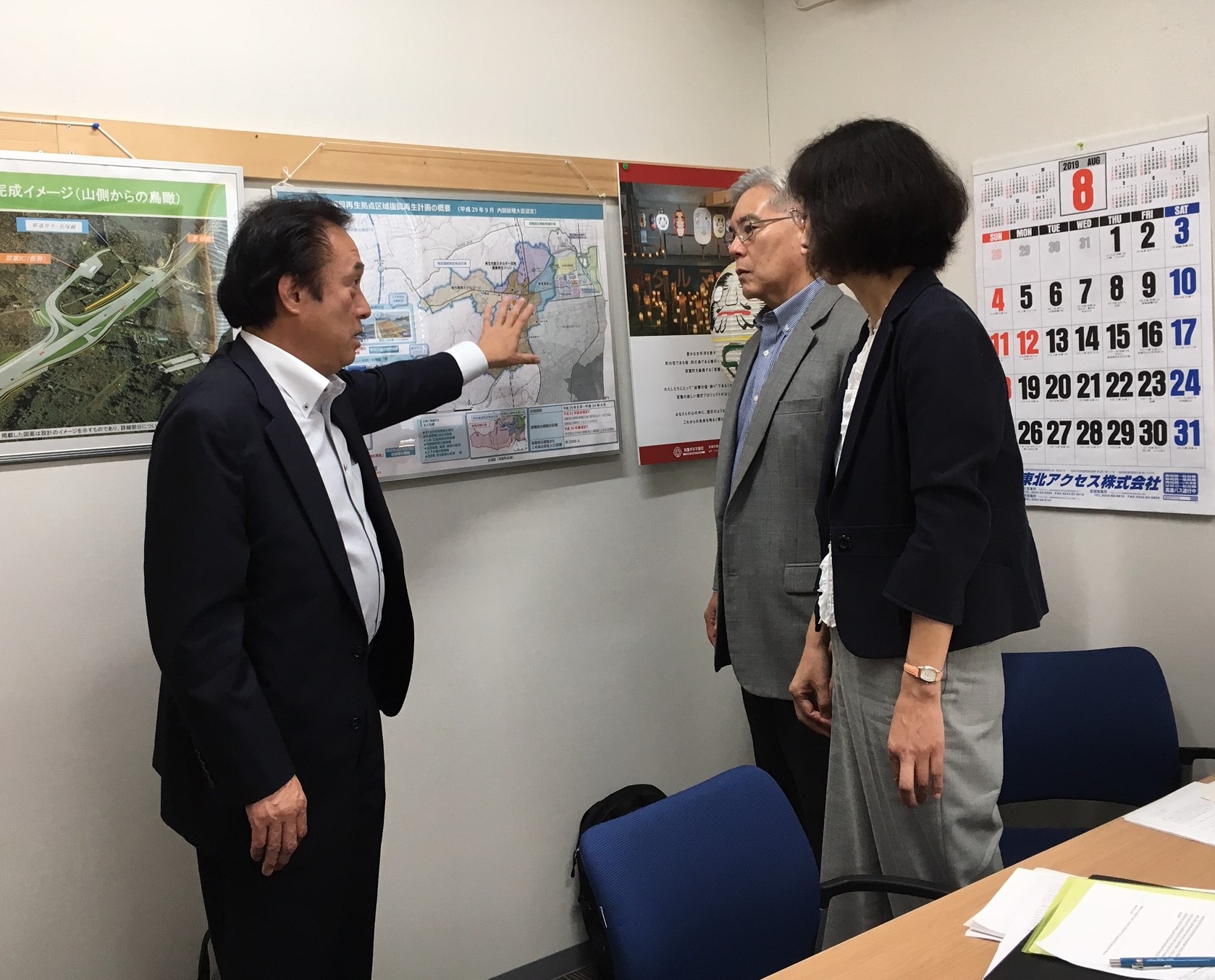
このインタビューは、ハワイの日系アメリカ人向け新聞の寄稿記事として紹介されました。
Mr. Steve Terada meeting with Futaba Town, Fukushima Prefecture, Mayor Izawa to ask the mayor questions and to learn about the nuclear disaster impact on Futaba Town, and the efforts to revitalize and repopulate the town (August 2019).
His interview was the basis for a newspaper article written for Japanese American audiences in Hawaii.
日刊サン「福島 再生の事実」:https://nikkansan.net/?s=Steve+Terada
最前線の戦士たちのもとで学びを深める
様々な手段を使って情報発信を進める過程で、原発事故後、原子力災害に対応できる専門家の不足が深刻な問題であることを知りました。放射線が人体に与える影響を正しく理解し、住民に対して放射線リスクを適切に伝えることができる専門家はほとんどいなかったのです。そして、原子力災害時の緊急被ばく対応ができる専門家の育成のために、長崎大学と福島県立医科大学が2016年に共同大学院を創設したことを知りました。原発事故直後から現地で対応にあたった山下俊一教授や髙村昇教授など、第一線で活躍する専門家から、放射線災害医療学や放射線災害復興学を学ぶことができる。このコースのカリキュラムこそ、私がまさに学びたい内容だと感じました。放射線に関する専門知識を身につけ、研究や調査に基づいた福島の情報を、より広く発信できるようにしたいと考えたのです。
しかしその後、新型コロナウイルスの影響で日本に入国できなくなったことから、代わりに2021年からハワイ大学公衆衛生大学院に入学し、公衆衛生の修士課程に向けた1年間の大学院コースを受講しました。そして、2023年9月、74歳の時についに共同大学院に入学しました。
私が長崎大学で研究を行うことを決めた理由には、いくつかの要因がありました。第一に、この共同大学院課程が新しく、他にはない「唯一無二」のものであり、他のどこでも受けることのできない専門的な教育が提供されていたからです。また、長崎大学が福島の被災地で活動しており、福島の人々が直面している現実の課題に直接触れることができる点は、私にとって非常に重要なポイントでした。第二に、長崎大学の教授陣が福島で非常に活発に活動しており、県の復興に関わる多くの有益な研究や調査を行い、それらについて発信している点に強い魅力を感じたからです。第三に、高村博士と実際にお会いして非常に感銘を受け、安心感を覚え、この方こそが私にとって理想的な指導教員であると感じたのです。
入学後は「福島第一原発事故後の除去土壌の復興再生利用に関する情報への関心」について研究するチームの一員として、調査データの分析や統計解析結果の整理などを担当。この研究から得られた知見は、放射線への不安や懸念が影響するすべての行動に対して有益であり、活用されるべきものです。放射線に対して誰もが抱く恐怖を前に、人々が自分のリスクをよりよく理解するために知りたいと思う情報は、復興に関わるすべての人々に共通して理解されなければなりません。これが理解されていなければ、政府と住民は同じ言語で話す(=コミュニケーションを図る)ことができず、問題解決に必要な信頼関係の構築さえも不可能になります。
また、人々が除去土壌の復興再生利用に対してどのように感じるかについて学んだことは、逆の状況にも応用できます。例えば、わずかな放射線が残る地域に避難者が戻る場合、彼らがどのような不安を抱えているのかをより理解できるのです。
この研究の過程で、長崎大学と福島医科大学が行った研究の量と質、学術論文の膨大さに触れることができ、1000㎞以上も離れた福島の支援を継続している、長崎大学の献身的といえる取り組みにも感銘を受けました。それと同時に、この大学院に在籍している両大学の先生方は、まさに“front‐line warriors(最前線の戦士)”であると実感しました。
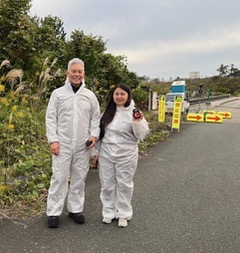
Mr. Steve Terada and fellow student in the Joint Graduate Course doing onsite studies in Fukushima Prefecture (October 2024).
私の中に根づいた人道支援の情熱
2011年3月11日以前の私は、福島のことを何も知らず、原発事故後も、農業、林業、漁業が中心の地方都市という印象しかありませんでした。しかし、今ではそれだけではありません。現在福島では、福島イノベーション・コースト構想や福島国際研究教育機構(F-REI)による学術プログラムなど、世界規模のプロジェクトが進んでおり、私の中の福島の見方も変わりました。先駆的ともいえる取り組みの結果を見守っていきたいです。
共同大学院で得た経験は、防災計画や被害経験に関する知識を修得し、更新し続ける道を支えてくれました。また、災害時に苦しむ人々を支援したいという関心も、さらに高めてくれました。つまり、大規模災害後の人道支援に対する情熱を、私の中に植え付けてくれたのです。
いま、日本から遠く離れたハワイに住んでいますが、今後も福島の代弁者として、一般の方々に復興状況を発信していく予定です。そしてもし、長崎大学や福島医科大学の教授と共同研究など活動を行う機会があれば、喜んで参加するつもりです。
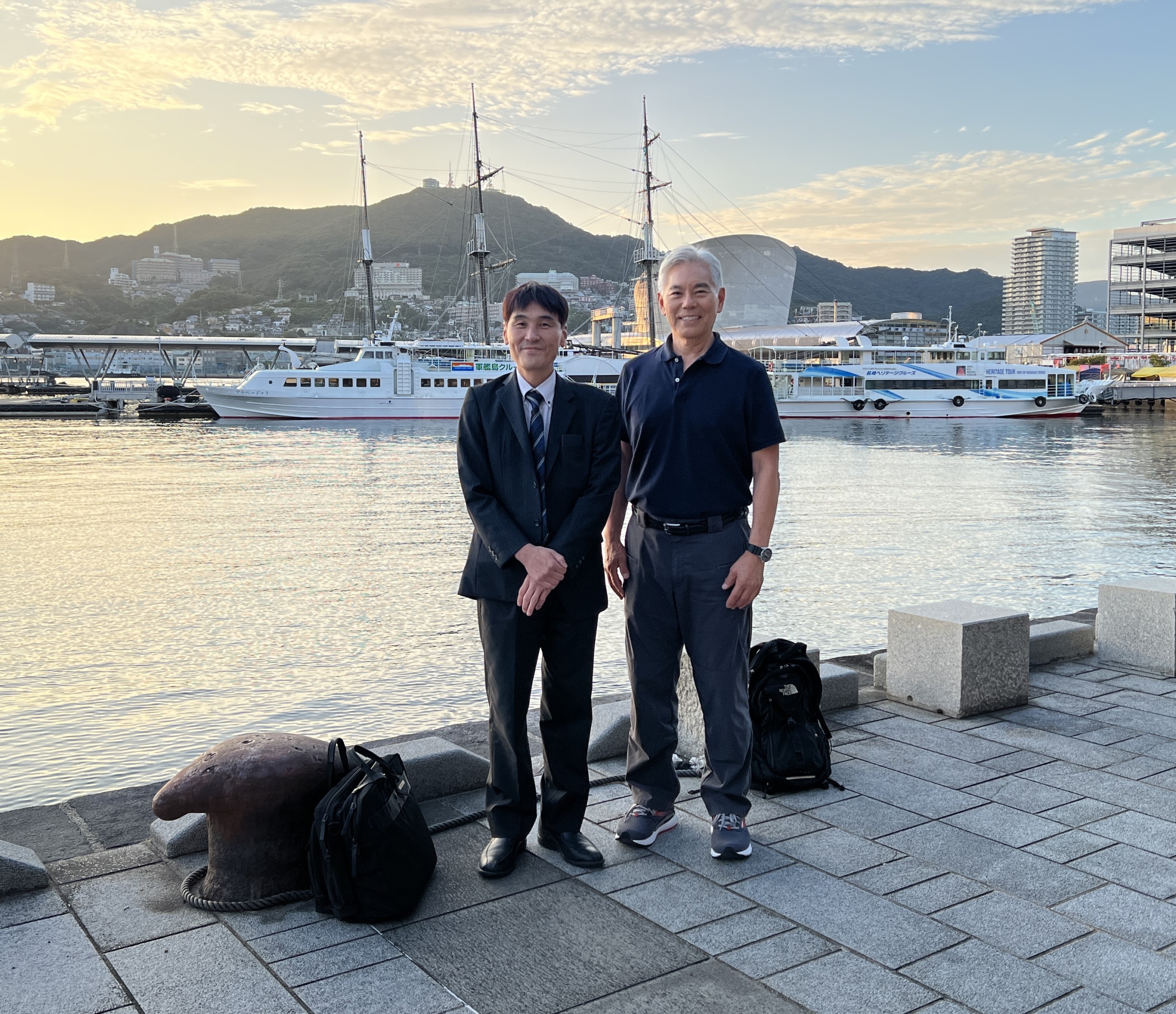
Mr. Steve Terada with Dr. Noboru Takamura in Nagasaki, Japan.
English Version
A Calling That Took Root in Fukushima, Where I Had No Prior Ties
In March 2011, I worked as a senior civilian with the U.S. Department of Defense (DOD), stationed at Camp Zama in Kanagawa Prefecture, home to U.S. Army Japan Headquarters. I was responsible for overseeing the U.S. Army’s real estate properties in Japan. Prior to working in Japan, I had been based in Washington, D.C., at the U.S. Department of State (DOS), where I worked as a portfolio manager overseeing U.S. diplomatic real estate located in East Africa and the Western Hemisphere, traveling extensively from country to country.
Through this work, I developed a strong interest in how residents in different countries sustain their livelihoods and pursue fulfilling lives while remaining rooted in their local communities. In hindsight, this interest became an important part of my research in Fukushima.
On March 11, 2011, while on a business trip in Okinawa, I received news that a great earthquake had struck somewhere in the northern part of Japan. At that time, however, I had never visited Fukushima and did not know anyone else who knew much, or anything about the prefecture, so I was not shaken when the disaster happened.
Two days after the disaster, I was assigned to the U.S. Army Emergency Operations Center (EOC), which was activated for the Tohoku triple disaster, and I joined Operation Tomodachi, the U.S. military’s disaster and humanitarian support program for Japan. The U.S. military was tracking radiation levels in all parts of Japan and had access to information that was not yet available to the Japanese government. Personally, however, I knew nothing about radiation and remember feeling considerable anxiety. The same was true for the Japanese staff working alongside us and for families living near the base.
Three months after the disaster, in June, a friend from Hawaii invited me to volunteer in Fukushima City. I took one-week personal leave and accompanied him. However, on the night of our arrival, my boss contacted me and ordered me back to Camp Zama. The U.S. government had issued an evacuation advisory for American citizens within an 80-kilometer radius of the nuclear power plant. The following morning, I had to leave Fukushima, but I promised the friends I had made there that I would return to help with the recovery.
It was seven years later in 2018, after my retirement, that I was finally able to return. Over two weeks, I traveled throughout the prefecture, including areas surrounding the nuclear plant. While meeting local people and learning about Fukushima’s current condition, I realized that although physical reconstruction—such as buildings and roads—was mostly completed, sales of local products remained sluggish and tourism had declined. A dark cloud of negative public reputation continued to linger.
Local residents told me, “Please help dispel negative reputations about Fukushima and help us go back to our normal living.” Encouraged by their words, I returned to the United States, obtained a one-year visa, and in March 2019 decided to relocate to Fukushima City with my wife.
Determined to eliminate the negative reputation about Fukushima, I began conducting environmental surveys throughout the prefecture with a dosimeter in hand. I shared interview videos on YouTube and contributed articles to a local newspaper in Hawaii, highlighting the safety of Fukushima’s agricultural and marine products.
Deepening My Studies Among the Front-Line Warriors
Through these outreach efforts, I came to understand that, following the nuclear accident, the shortage of professionals who could respond to nuclear disasters had become a serious issue. There were very few experts who properly understood the health effects of radiation and could communicate effectively about radiation risks to residents.
I then learned that in 2016, Nagasaki University and Fukushima Medical University had established a joint graduate school to train experts capable of responding to emergency radiation exposure in the event of nuclear disasters. I discovered that I could study disaster radiation medical science and post-disaster recovery under leading experts such as Professors Shunichi Yamashita and Noboru Takamura, who had worked on the front lines immediately after the accident. The curriculum was precisely what I wanted to learn. I wanted to become an expert on radiation and be able to inform evidence-based information about Fukushima more broadly.
However, due to COVID-19 travel restrictions, I was unable to enter Japan. Instead, in 2021, I enrolled in a one-year graduate-level program at the University of Hawaii’s School of Public Health, working toward a master’s degree in public health. Then, in September 2023, at the age of 74, I finally entered the joint graduate program at Nagasaki University.
There were several reasons I chose to conduct my research at Nagasaki University. First, the joint graduate program was new and “one of a kind” with specialized instruction that could not be found anywhere else. Moreover, Nagasaki University was actively engaged in Fukushima’s affected areas, allowing students to directly confront the real problems faced by the people in Fukushima—something extremely important to me.
Second, I was impressed by how actively Nagasaki University faculty members seemed very active in Fukushima, conducting many helpful studies and investigations related to the prefecture’s recovery and widely disseminating their findings.
Third, after meeting Dr. Takamura in person, I was deeply impressed and felt comfortable. I knew he would be the perfect mentor and sensei for me.
After enrolling, I joined a research team studying public interest in information regarding the recycling of contaminated soil following the Fukushima Daiichi Nuclear Power Plant accident. I was responsible for analyzing survey data and organizing statistical analytics. The knowledge gained from this research is valuable for understanding all actions impacted by concerns and fears about radiation.
In the face of the universal fear that radiation evokes, the information people want in order to better understand their own risk must be universally understood by everyone involved in reconstruction. Without this shared understanding, the government and residents will not be speaking the same language—cannot communicate effectively—and it becomes impossible to build the trust necessary for problem solving.
What I learned about how people feel regarding the reuse of contaminated soil can also be applied in reverse situations. For example, when evacuees consider moving back into areas where small amounts of radiation remain, we can better understand the fears they may carry.
Through this research process, I was struck by both the quantity and quality of research conducted by Fukushima Medical University and Nagasaki University. I was deeply moved by Nagasaki University’s dedicated efforts to continue helping Fukushima’s recovery despite being more than 1,000 kilometers away. At the same time, I realized that the professors from both universities involved in this graduate program are truly “front-line warriors.”
The Humanitarian Passion That Took Root Within Me
Before March 11, 2011, I knew nothing about Fukushima. After the nuclear accident, I regarded it simply as a rural prefecture centered on agriculture, forestry, and fisheries. Today, however, I see much more. Fukushima is now home to globally significant initiatives such as the Fukushima Innovation Coast Framework and F-REI academic component of reconstruction. My perspective on Fukushima has changed, and I am interested to see how these pioneering efforts will develop.
The experience I gained in the joint graduate program has kept me on the path of continually acquiring and upgrading my knowledge related to disaster planning and mitigation. It has also intensified my interest in helping people who suffer during disasters. In other words, it has firmly instilled in me a passion for providing humanitarian assistance after major disasters.
Although I now live far from Japan in Hawaii, I plan to continue serving as an advocate for Fukushima, sharing updates on its recovery with the general public. And if there are opportunities to collaborate in research or other activities with professors from Nagasaki University or Fukushima Medical University, I would gladly participate.